Project Work Template For Polytechnic Students
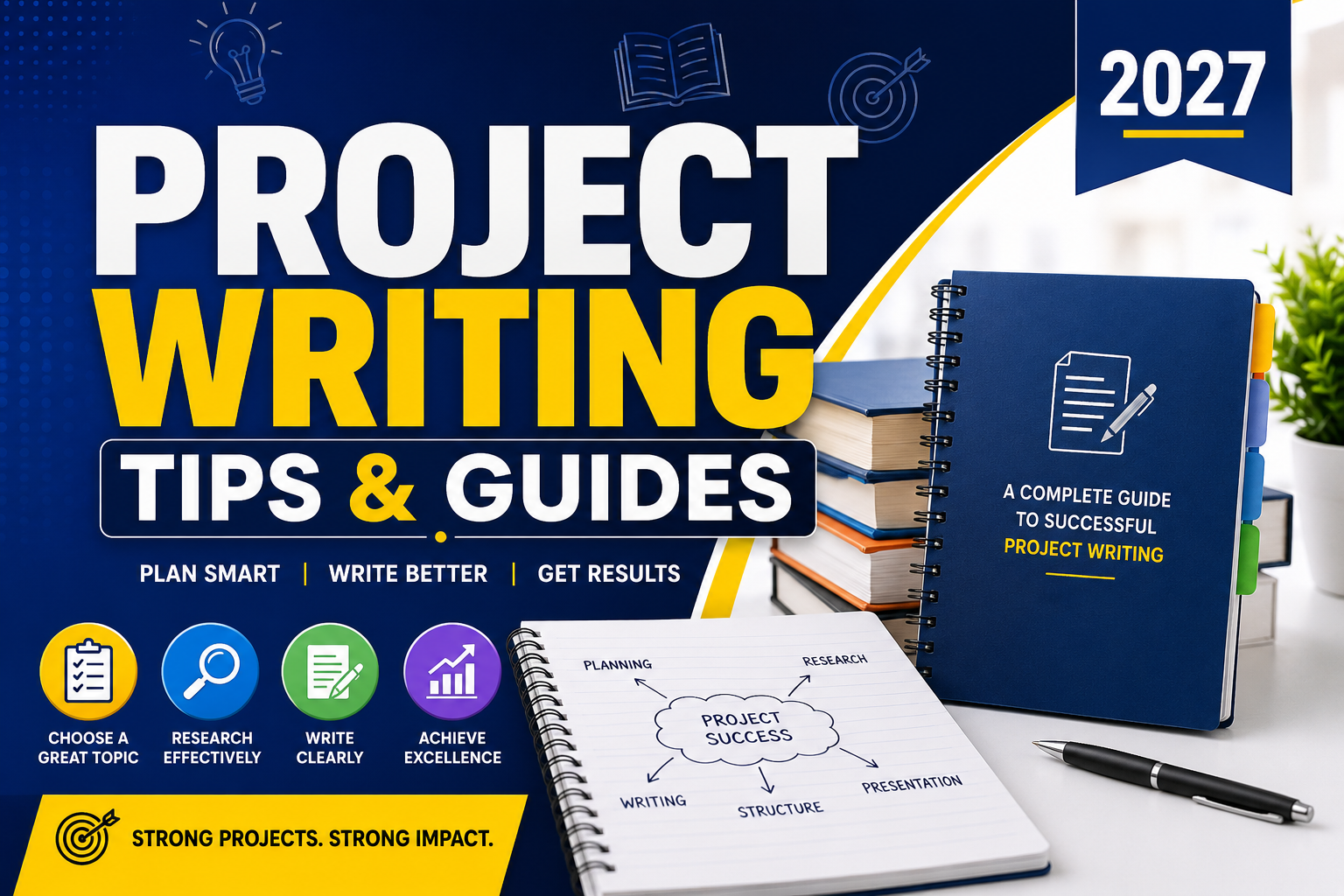
For many polytechnic students, project work represents one of the most important stages of their academic training because it provides an opportunity to apply classroom knowledge to practical problems.
Unlike routine coursework, a final-year project requires students to identify a problem, review relevant literature, collect and analyze information, and present evidence-based findings in an organized academic format. This makes project writing an important part of developing research, analytical, communication, and problem-solving skills required in both academic and professional settings.
In Nigerian polytechnics, the importance of project work is particularly evident at the Higher National Diploma (HND) level, where students are expected to demonstrate their ability to connect theoretical concepts with practical applications within their disciplines.
However, many students encounter difficulties with areas such as selecting a research topic, structuring chapters, developing objectives, presenting methodology, organizing references, and meeting their institution’s formatting requirements. These challenges can result in repeated corrections, delays in project completion, and unnecessary pressure during supervision and defense preparation.
A well-structured project work template for polytechnic students can therefore provide a practical framework for organizing the different components of an academic project. By following a clear structure, students can better understand what should be included in each chapter, maintain consistency throughout the research, and reduce common formatting and organization errors.
Whether a student is beginning a National Diploma (ND) or HND project or preparing for final project defense, using an appropriate template can make the writing process more systematic, manageable, and aligned with academic expectations.
The quality of a polytechnic project is influenced not only by the strength of the research idea but also by how clearly the study is organized and presented. Academic research is expected to follow a logical structure that allows supervisors and examiners to evaluate the research problem, methodology, findings, and conclusions systematically. For students, a well-designed project work template therefore serves as more than a formatting guide—it provides a framework for developing a coherent research document from the initial proposal through the final defense.
Research writing typically follows a sequence in which the preliminary pages introduce the project, the main chapters develop and investigate the research problem, and the concluding sections document the evidence and supporting materials. Although specific requirements vary among polytechnics, departments, and institutions, a standard polytechnic project format commonly contains the following sections:
READ ALSO:Common Mistakes Students Make In Project Introductions And How To Avoid Them
1. Title Page
The title page provides the basic identification of the project. It normally contains the project title, student’s name, matriculation number, department, institution, qualification, and year of submission. Because it is the first formal page of the research document, accuracy and consistency are important.
2. Certification Page
The certification page provides formal evidence that the project has been supervised and approved according to the institution’s academic requirements. Depending on the institution, it may require the signatures of the project supervisor, Head of Department, and other authorized academic officials.
3. Dedication and Acknowledgment
The dedication is usually a brief statement recognizing individuals or groups to whom the student wishes to dedicate the work. The acknowledgment provides an opportunity to recognize supervisors, lecturers, institutions, respondents, family members, colleagues, or others who contributed to the completion of the research.
4. Abstract
The abstract provides a concise overview of the entire study. A well-written abstract normally identifies the research problem, objectives, methodology, major findings, and conclusion. It allows readers to understand the purpose and outcome of the research without reading the complete project.
5. Table of Contents
The table of contents presents the major chapters, sections, subsections, and corresponding page numbers. In a lengthy academic document, this structure improves navigation and enables supervisors and examiners to locate specific parts of the research efficiently.
READ ALSO:Key Elements Of A Good Project Introduction
6. Chapter One: Introduction
Chapter One establishes the foundation of the research. It commonly contains the background of the study, statement of the problem, objectives of the study, research questions, hypotheses where applicable, significance of the study, scope, and definition of relevant terms.
A strong introduction should move from the broader context of the subject to the specific problem being investigated. Most importantly, the research objectives should correspond with the problem and questions being addressed.
CHECK OUT:
7. Chapter Two: Literature Review
The literature review examines existing knowledge and previous studies related to the research topic. Rather than simply listing what other researchers have written, an effective literature review compares findings, identifies areas of agreement or disagreement, establishes the theoretical or conceptual foundation of the study, and highlights gaps that the current research intends to address.
8. Chapter Three: Research Methodology
The methodology explains how the study was conducted. Depending on the nature of the project, this chapter may include the research design, study population, sample size, sampling technique, instruments for data collection, validity and reliability procedures, data collection process, and methods of data analysis.
This section is particularly important because it enables readers to understand how the evidence supporting the study’s conclusions was obtained.
9. Chapter Four: Data Presentation and Analysis
Chapter Four presents and analyzes the information collected during the research. Quantitative studies may use tables, charts, percentages, statistical tests, or other analytical techniques, while qualitative projects may organize findings around themes, categories, or patterns.
The purpose is not simply to display data but to interpret the evidence in relation to the research questions or hypotheses.
10. Chapter Five: Summary, Conclusion, and Recommendations
The final chapter brings the research together. It normally summarizes the major findings, presents conclusions based on the evidence obtained, and provides recommendations that are relevant to the research problem.
Good recommendations should be practical and directly connected to the findings rather than being general suggestions unrelated to the study.
11. References and Appendices
The reference section documents the academic sources cited throughout the project and should follow the referencing style required by the institution or department, such as APA. Appendices may contain supporting materials such as questionnaires, interview guides, detailed calculations, raw data, letters, diagrams, or other research instruments.
A properly structured project work template can make the research process considerably easier because it gives students a clear framework for organizing their ideas, evidence, and conclusions. It also helps ensure that important sections are not accidentally omitted during project preparation.
However, students should not assume that one template applies identically to every polytechnic. Departmental guidelines, supervisor instructions, and institutional project manuals should take precedence because requirements for chapter arrangement, formatting, referencing, pagination, and preliminary pages may differ.
Ultimately, a project is more than an academic requirement. It demonstrates a student’s ability to identify a problem, investigate it systematically, analyze evidence, and communicate conclusions in an academically acceptable manner. Using an appropriate project structure from the beginning can therefore help students produce work that is clearer, more organized, and easier to evaluate during supervision and project defense.